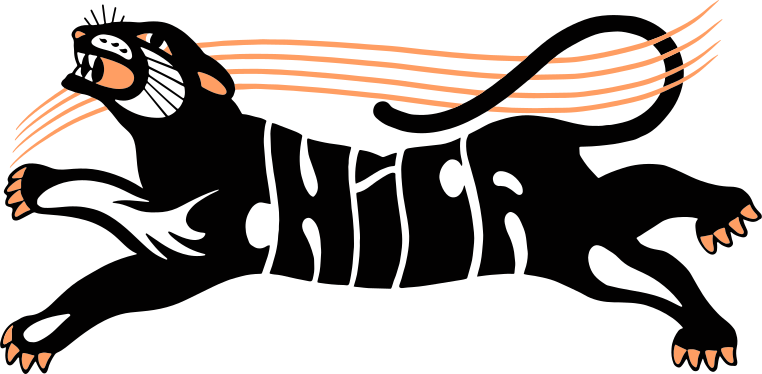

The Original Flash:
Marie Schubert, an author and illustrator, made her mark with a work titled ‘Minute Myths and Legends’ in 1934. This remarkable piece contained magnificent illustrations, including an early version of the prowling panther, considered one of the original sources for tattoo flash. While the first tattoo remains uncertain, it is speculated that William Grimshaw, in the 1940s, might have been one of the pioneers due to his tattoo sheets resembling Schubert’s illustration.

What is the Traditional Style?
The traditional tattoo style, often referred to as “Old School,” is a classic and iconic approach to tattooing that emerged in the early days of American tattoo culture. It’s characterized by several distinct features:
- Bold Outlines: Traditional tattoos typically feature strong, bold outlines that define the design and make it stand out.
- Vibrant Colors: They use a palette of vibrant primary colors like red, green, yellow, and blue, which are applied in solid blocks to create a vivid and eye-catching appearance.
- Timeless Iconography: Traditional tattoos often incorporate classic and timeless images such as anchors, roses, hearts, eagles, pin-up girls, nautical symbols, and animals like panthers or swallows.
- Limited Shading: This style traditionally employs minimal shading compared to other tattoo styles. Shadows and depth are created through the use of colors rather than intricate shading techniques.
The traditional style has a rich history and remains popular due to its bold and easily recognizable designs that have stood the test of time.

Evolution Across the Decades: Shifting with Every Generation
After locking in, the Black Panther design spread like wildfire among big-shot tattoo artists like Paul Rogers or Norman Collins (aka Sailor Jerry), making it a staple in their flashes and fueling its rise. Ever since, tattoo artists galore have jazzed up and tweaked the panther’s image. They’ve reshaped it, thrown in details like snakes slithering on its bod, or splashed red marks on its claws. Each tweak mirrors how tattoo culture and art have morphed through the years.

Peak in the ’50s and ’60s: Panther Ink as a Symbol of Style and Rebellion
The boom of body art during World War II churned out this ultimate predator tattoo design, often used to mask war wounds and soldiers’ scars, even cover up unwanted ink from before, thanks to its solid black layout that was a breeze to resize. As tattoos gained traction among returning sailors, the black panther tattoo became all the rage.
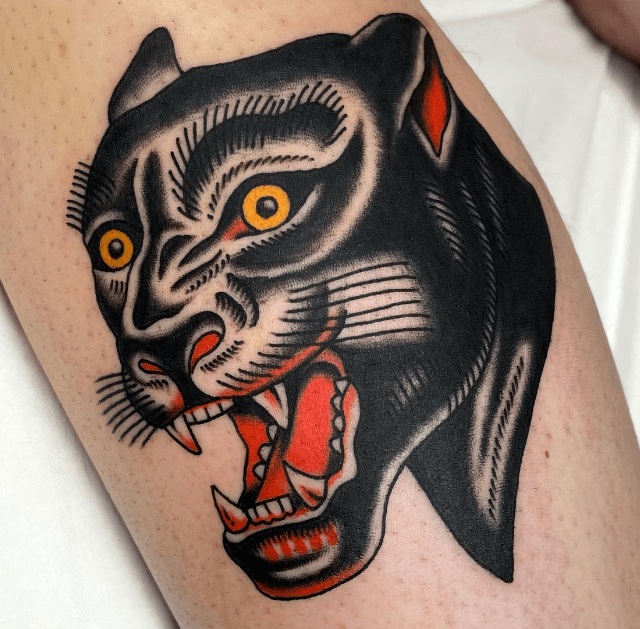
The Panther as a Classic Example of Traditional Tattooing
Panther tattoos have influenced fashion, art, and pop culture. They’ve appeared in fashion designs and featured in contemporary artworks, solidifying their status as a lasting symbol of power and elegance.
Today, the panther remains a sought-after choice for tattoo enthusiasts. Its captivating history and symbolism of power and elegance continue to enthrall those seeking a classic, iconic design full of meaning.

Tips for a Long-lasting, Vibrant Panther Tattoo
To maintain the intensity and quality of a panther tattoo, especially if it’s black, it’s crucial to follow specific care instructions. Proper hydration, using Tiger Spit Balm, and post-care routines are essential to preserve its splendor over time.
.